

Agents Can Do the Work Themselves Now — So Why Are Workflow Platforms Worth More Than Ever?
Berlin, 2019. Jan Oberhauser had had enough. He'd been working in visual effects in Hollywood — a job that looks like dream-making from the outside, but insiders know is really manual labor: rendered frame sequences that had to be moved, transcoded, renamed, and synced to downstream teams by hand, day after day. Tired of being a "high-end assembly-line worker," he wrote his own tool to automate the entire pipeline.
In June 2019, the project — called "nodemation," a portmanteau of node and automation — was pushed to GitHub. Four months later it launched publicly on Product Hunt and Hacker News, and unexpectedly took off. It would later be renamed n8n.
Seven years on, in May 2026 at SAP's Sapphire conference, the German software giant announced a strategic investment in n8n at a $5.2 billion valuation — making n8n Germany's most valuable AI company, with roughly $240 million raised in total.
Here's the interesting part: those same seven years were exactly the period in which AI agents went from research papers to production environments. When agents claim to plan on their own, call tools on their own, and finish the job on their own, why is an "old-school" workflow tool — one that still asks humans to drag and drop nodes — becoming more valuable, not less?
To answer that, we first need to get clear on what actually separates a workflow from an agent.
1. Workflow systems: rails laid down for AI
In plain terms, a workflow system is "a flowchart turned into a machine": you draw out "if A happens, do B, then check C, then send to D" as nodes and edges, and the machine executes it exactly the same way, every single time.
In December 2024, Anthropic's widely cited essay Building effective agents gave the classic pair of definitions:
"Workflows are systems where LLMs and tools are orchestrated through predefined code paths."
"Agents, on the other hand, are systems where LLMs dynamically direct their own processes and tool usage, maintaining control over how they accomplish tasks."
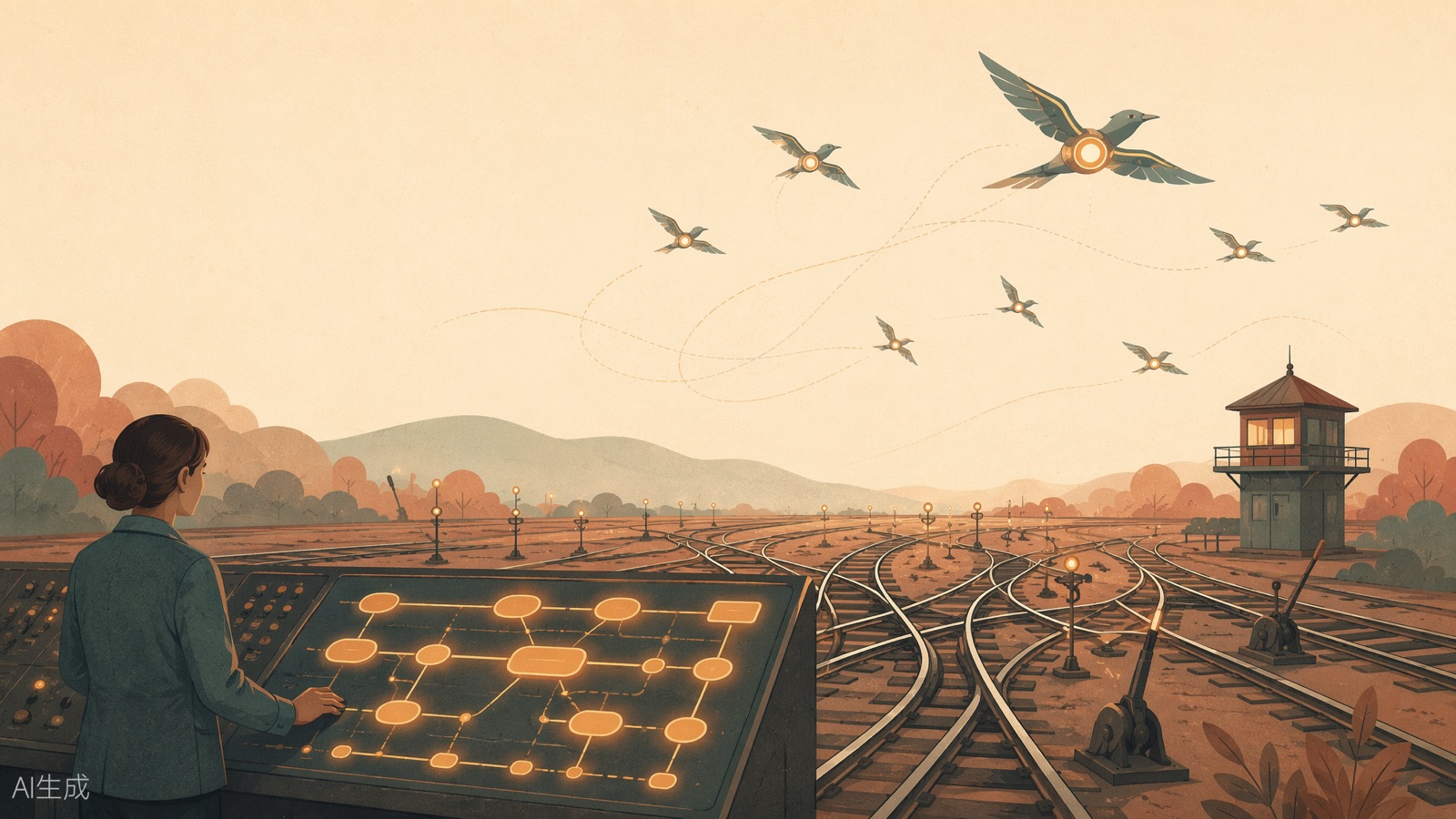
The one-line version: a workflow is like a subway — the lines and timetables are laid out in advance, and determinism is extremely high. An agent is like a bird — give it a destination and it finds its own route: flexible, but hard to predict. Anthropic itself spells out the trade-off bluntly:
"Workflows offer predictability and consistency for well-defined tasks, whereas agents are the better option when flexibility and model-driven decision-making are needed at scale."
n8n and Coze (Kouzi) are the two most representative "subway companies" in this story — though their business models are quite different.
2. n8n: the plumber king founded by a VFX artist
n8n positions itself as a general-purpose automation and orchestration layer: SaaS apps, databases, and message queues of every stripe get wired together into a single network. Its official press materials claim more than 1,000 integrations (the GitHub README still says 400+ — same company, different counting methods).
Its most distinctive trait is its licensing model. Since March 2022, n8n has used the Sustainable Use License under the fair-code philosophy (based on the Elastic License 2.0): the code is visible, self-hostable, and modifiable, but if you want to commercially host or resell it, you need to buy an Enterprise/Embed license. This is not open source in the strict OSI sense, and the community has debated it ever since — but it's exactly this "open code, gated commerce" design that underpins the business: the self-hosted community edition is free and unlimited, while the cloud version charges per execution (one complete workflow run counts as one execution, regardless of how many steps it contains), starting at roughly €20 per month.
n8n's funding history is a steeply rising line: a $1.5 million Sequoia seed round in March 2020; a $12 million Series A in 2021; a roughly $60 million Series B in March 2025 at a ~$350 million valuation; then a $180 million Series C in October of the same year at a $2.5 billion valuation, led by Accel with participation from Nvidia's and Deutsche Telekom's venture arms. And after that came SAP's strategic investment at the $5.2 billion valuation: the two signed a multi-year agreement to embed n8n natively into SAP Joule Studio, targeting general availability in Q3 2026. In other words, thousands of enterprises running SAP worldwide will soon be using this small Berlin team's "plumbing" directly inside their ERP. In December 2025, n8n also shipped its 2.0 stable release, which the company calls a "Hardening Release" with security hardening on by default.
What really sent capital into a frenzy, though, is its AI pivot. In October 2023, n8n shipped LangChain nodes (graduating to GA the following month), then successively added AI Agent nodes (supporting tool sub-nodes, memory, RAG, and human-in-the-loop), plus MCP client and server nodes. By mid-2026 it had around 70-plus AI nodes, along with an AI Workflow Builder that generates workflows from natural language. The founder revealed on Sequoia's podcast that about 75% of customers now use the AI features, and that revenue quadrupled in the eight months following the AI pivot. In 2025 alone, n8n gained 112,400 new GitHub stars — the highest single-year increase in the ten-year history of the JavaScript Rising Stars rankings — and its star count is now approaching 200,000. By the company's own count, it has 1.7 million monthly active builders and more than 1,400 enterprise customers.
3. Coze: ByteDance's agent factory
If n8n is the plumber, ByteDance's Coze is more like an "agent factory."
Its debut carried the classic ByteDance tempo: the international version, coze.com, went live in November 2023, and the Chinese version "Kouzi" officially launched on February 1, 2024. The two versions don't share accounts or data, and each plugs into its own ecosystem — Doubao, Feishu (Lark), WeChat, and Douyin at home; Discord and Telegram abroad. The official positioning is an "all-in-one AI agent development platform": visual workflow orchestration, a plugin marketplace, knowledge-base RAG, long-term memory, multi-agent mode, and one-click publishing to multiple platforms. The company claims to serve "tens of thousands of enterprises and millions of developers." The pricing is equally down-to-earth: in China, the personal advanced plan costs RMB 9.9 per month (about $1.4), and the enterprise plan starts at RMB 490 per month (about $68).
On July 26, 2025, ByteDance open-sourced Coze Studio and Coze Loop under Apache 2.0, free for commercial use. The repo blew past 10,000 stars in two days, and Coze Studio now sits above 21,000; a humble 2-core, 4GB machine is enough to run it via Docker. But note the deliberate feature gap between the open-source and commercial editions: multi-workspace support, multi-agent mode, Chatflow, and certain knowledge-base data sources are absent from the open-source version, and publishing channels are limited to the API and Chat SDK.
Even more intriguing is its trajectory: in April 2025 it began beta-testing "Coze Space" (general-purpose agents for collaborative office work); in September it launched AI Excel; in December, at the Volcano Engine FORCE conference, it unveiled "Coze Coding" (Vibe Coding). In January 2026 came the Coze 2.0 brand upgrade, launching an Agent Skills store, Agent Plan, Agent Coding, and Agent Office in one go, repositioned as "workplace AI." At the end of May it released Coze 3.0, focused on multi-person, multi-agent collaboration, which rolled out fully in early June. In three years, Coze has swung from "consumer bot store" to "workflow platform" to "serious developers plus workplace AI" — and every turn has brought it closer to agents and further from pure orchestration.
4. The differences: one is like AWS, the other like Douyin
| Dimension | n8n | Coze |
|---|---|---|
| Positioning | General-purpose automation and orchestration layer | LLM-native agent application platform |
| Licensing | fair-code (Sustainable Use License); not open source in the strict sense | Commercial SaaS + Apache 2.0 open-source edition (with a feature gap) |
| Deployment | Free, unlimited self-hosting + official cloud | Cloud-first; open-source edition self-deployable on 2-core/4GB Docker |
| Pricing | Per execution; Cloud from ~€20/month | China: RMB 9.9/month (~$1.4) personal; enterprise from RMB 490/month (~$68) |
| Ecosystem strengths | 1,000+ integrations, code-level freedom, data sovereignty | Model integration, knowledge-base RAG, bot distribution channels |
| Best for | Developers, technical teams, compliance-sensitive enterprises | Operations and business staff, AI app creators |
Beyond the table, there's a more intuitive analogy: n8n is like AWS; Coze is like Douyin (the Chinese sibling of TikTok).
n8n sells utilities — water, electricity, gas. It doesn't care what you use automation for; it only guarantees that the pipes are wide enough, stable enough, and able to run in your own data center. Data sovereignty and code-level freedom are its moat, which is why an enterprise software giant like SAP is willing to embed it into its own platform. Coze sells the stage and the distribution channels — it bundles models, knowledge bases, plugins, and publishing endpoints so that people who can't code can assemble a bot and push it to Douyin and WeChat with one click. Zero ops, powerful distribution: that's the most ByteDance thing about it.
Which is why the consensus across third-party comparisons is that the two are less competitors than complements — use n8n to plumb the "sewage lines" between internal enterprise systems, and use Coze to quickly spin up user-facing agent applications. They often show up in the same tech stack.
5. In the agent era, what is a workflow actually worth?
Now we can answer the opening question head-on. Let's put the bad news on the table first.
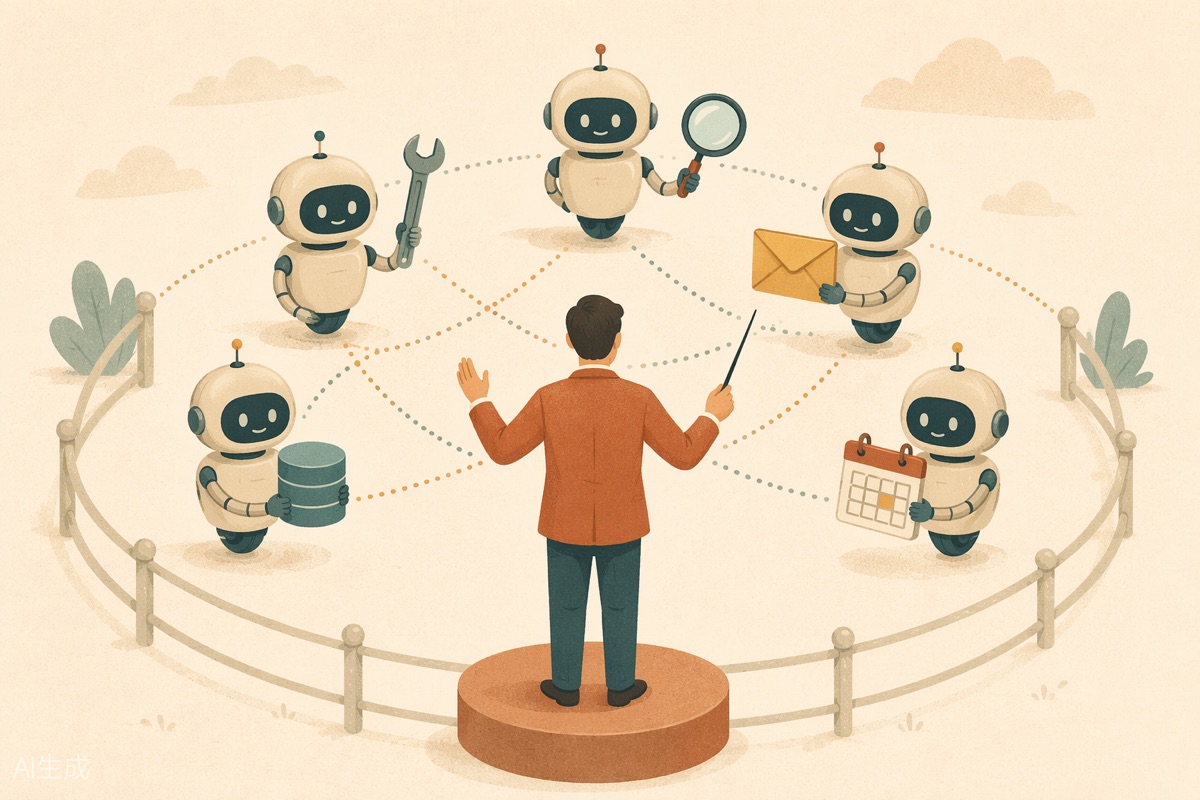
The bad news is real. In June 2025, Gartner predicted that by the end of 2027, over 40% of agentic AI projects will be canceled, citing escalating costs, unclear business value, and inadequate risk controls. At its October 2025 DevDay, OpenAI launched AgentKit — whose visual, drag-and-drop Agent Builder was bluntly described by industry watchers as "walking straight into n8n, Zapier, and Make's territory." If even the model vendors are getting into orchestration, does the workflow platform still have a moat?
But lay out the evidence, and it points the other way. First, a concession: purely static, set-in-stone workflows will indeed lose some ground to agents — scenarios where "the process was never supposed to be fixed" should have been left to model-driven decisions all along. Yet in that very same Gartner press release, senior analyst Anushree Verma put it plainly:
Anushree Verma, GartnerMany use cases positioned as agentic today don't require agentic implementations.
Read that sentence in reverse and you get the real point: a great many scenarios call for deterministic automation; only a minority genuinely need agents. McKinsey's November 2025 global survey confirms the gap: 62% of organizations are at least experimenting with AI agents, but only 23% have scaled them in at least one function — and no single function has a scaling rate above 10%. The same Gartner forecast adds that by 2028, 33% of enterprise software will include agentic AI (up from less than 1% in 2024), and at least 15% of day-to-day work decisions will be made autonomously by agents. Note the wording: "include." Agents grow inside the skeleton of enterprise software; they don't replace the skeleton.
The most telling evidence comes from what the "opponents" are doing. OpenAI builds the strongest agents and a visual orchestrator. LangGraph's official documentation emphasizes that you can "mix deterministic steps with LLM-driven agentic steps" in a single graph, with a customer list that includes Klarna, Uber, and J.P. Morgan. Zapier renamed its AI product line from Central to Agents and took it GA at the end of 2025. n8n ships built-in AI Agent nodes and MCP support. Coze went straight to multi-agent mode. The industry is converging on the middle from both ends: agent systems are adding determinism; workflow systems are adding autonomy.
Why must they converge? Because what enterprises want was never "clever" — it's "reliable and accountable." In a Zapier survey of 200 enterprise executives, 93% said AI projects at least occasionally fail to reach production because of governance constraints. An autonomous agent can write a beautiful email, but the finance system demands that every payment pass through an approval node with an auditable trail. This is precisely the triple value of workflow platforms in the agent era:
First, the deterministic skeleton. Lock down the critical paths with predefined flows, and confine the agent's room to improvise to the safe nodes — only above the rails are the birds allowed to circle.
Second, the blood vessels of system integration. No matter how smart an agent is, it still has to reach the company's CRM, ERP, and databases. n8n's 1,000+ integrations, and the Model Context Protocol (MCP) that Anthropic open-sourced in November 2024 and donated to the Linux Foundation in late 2025, solve exactly this "last mile" of connectivity.
Third, the gates of human-machine collaboration. Human-in-the-loop is not a technical defect — it's a hard requirement of enterprise governance. Where a human sign-off is needed and where the machine can be left alone, workflow nodes are the most natural place to install the gates.
As the spectrum above shows, the interesting action is in the hybrid middle.
Put the three values together and the conclusion is clear: workflow platforms haven't been demoted to "last-generation technology" in the agent era — they're evolving into its infrastructure. The rails handle determinism, the signal lights handle safety, and the dispatch room ensures a human can take over at any moment. The more birds in the sky, the greater the demand for rails and traffic rules. This isn't defending legacy ground; it's securing the choke point.
6. Closing: a decision checklist for readers
Use a pure workflow when the task is well-defined, high-frequency, and repetitive, and a single mistake is costly — reconciliation, approvals, data sync. Determinism itself is the value.
Use a pure agent when the goal is clear but the path is unknown and every situation is different — research, troubleshooting, open-ended writing. Flexibility itself is the value.
Use a hybrid architecture for most serious business, which lands right here — workflows as the skeleton and the gates, agents as the brains inside the nodes, and humans stationed at the critical approval points. Anthropic's advice works as a motto: "…we recommend finding the simplest solution possible, and only increasing complexity when needed."
Back to our VFX artist. What Oberhauser wanted to eliminate was never "process" itself — it was the repetitive labor inside the process. The agent era is no different:
The birds explore the sky; the rails deliver the freight on time. The two don't replace each other — they each take their station.
Whoever lays the rails well and installs the signal lights correctly will be the real infrastructure of the agent era.
References
- Anthropic, "Building effective agents" (2024-12-19): anthropic.com/engineering/building-effective-agents
- n8n official Press Kit: n8n.io/press
- n8n GitHub repository: github.com/n8n-io/n8n
- JavaScript Rising Stars 2025: risingstars.js.org/2025
- Gartner press release, "Gartner Predicts Over 40% of Agentic AI Projects Will Be Canceled by End of 2027" (2025-06-25): gartner.com/en/newsroom/press-releases/2025-06-25
- McKinsey, "The State of AI in 2025: Agents, Innovation, and Transformation" (2025-11-05): mckinsey.com/capabilities/quantumblack/our-insights/the-state-of-ai
- OpenAI, "Introducing AgentKit" (2025-10-06): openai.com/index/introducing-agentkit
- Coze Studio GitHub repository: github.com/coze-dev/coze-studio
- Coze official documentation (in Chinese): docs.coze.cn
- GeekPark: in-depth interview with the Coze team (2026-01-20, in Chinese): geekpark.net/news/359437
- LangGraph official documentation: docs.langchain.com/oss/python/langgraph/overview
- Anthropic, "Introducing the Model Context Protocol" (2024-11-25): anthropic.com/news/model-context-protocol